
Buff Monster. Melt with Me.
For more than two decades, Buff Monster has built a world entirely his own. Melting ice cream, wide-eyed creatures, oversized grins, and an unmistakable palette of pinks have become his visual language—equal parts pop art, street culture, Japanese kawaii, and underground punk. Beneath the playful surface, however, is a practice rooted in repetition, optimism, and the belief that art can interrupt the everyday with something unexpected.
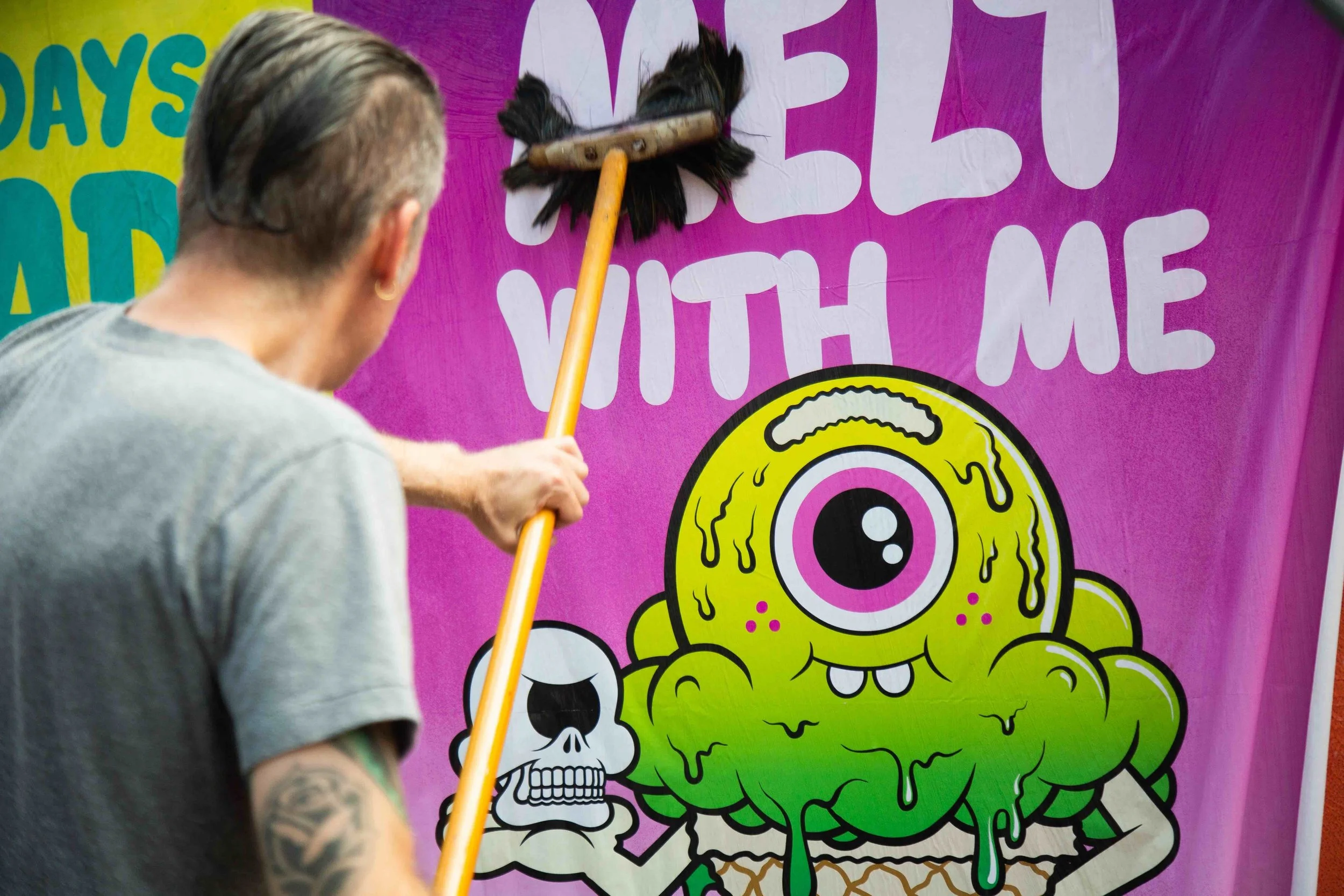
While Buff Monster's work has found a home in galleries, museums, and private collections around the world, it has never lost its relationship to the street. Public space remains central to the way the work is experienced, not as a backdrop, but as an active participant. The city introduces scale, texture, weather, movement, and chance, allowing each piece to exist within an environment that is constantly changing. A painted character on a quiet wall carries one meaning; the same image surrounded by traffic, scaffolding, storefronts, and thousands of pedestrians becomes something altogether different.
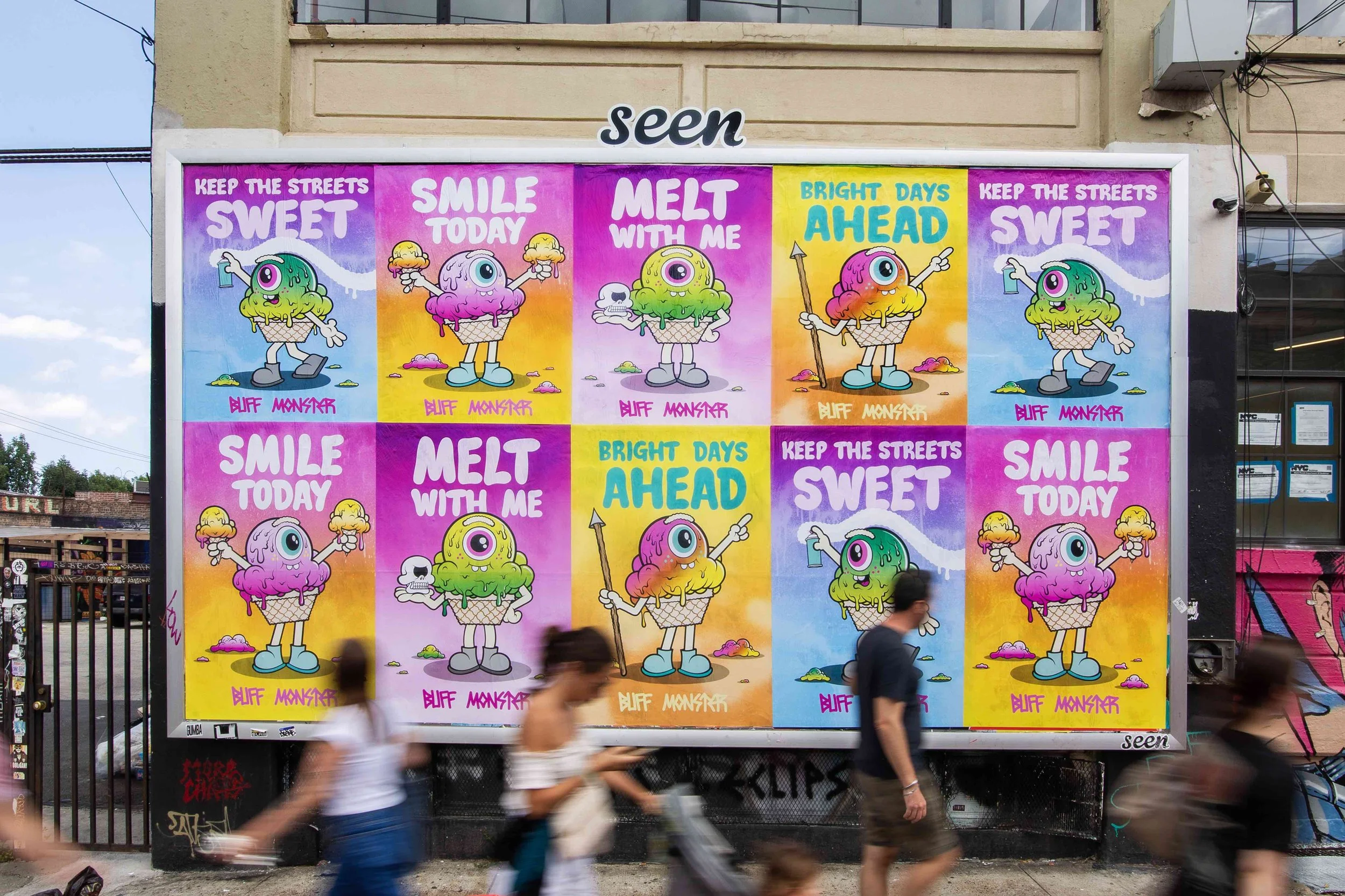
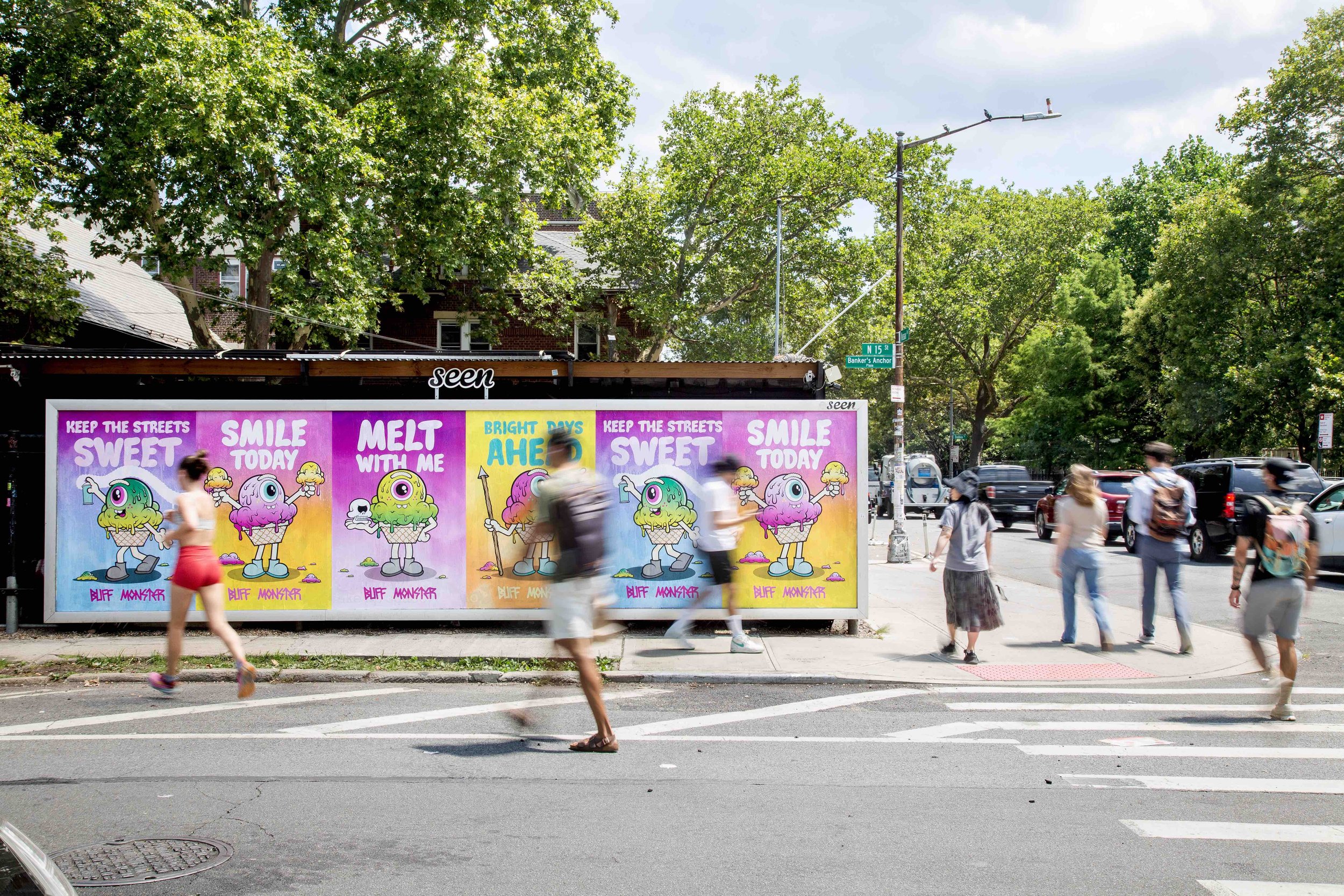
For this open-air exhibition, SEEN/ARTS presented Buff Monster's work throughout Manhattan and Brooklyn, creating a citywide experience that unfolded across neighborhoods rather than within the confines of a single venue. Installed on walls woven into the everyday fabric of New York, the works emerged unexpectedly, between familiar storefronts, alongside construction barriers, and across streets that millions of people pass through every day. The exhibition had no formal entrance or prescribed route. It revealed itself gradually, rewarding curiosity rather than demanding attention.
Encountered at this scale, Buff Monster's imagery takes on a different rhythm. His unmistakable characters become architectural, occupying the same visual territory as billboards, murals, street signs, and the layered history written across the city's surfaces. Their optimism is never sentimental, nor is their humor incidental. Instead, the work operates through repetition and recognition, inviting viewers into a world that feels both immediately familiar and subtly surreal. The longer one spends with the images, the more they reveal a careful balance between innocence and absurdity, simplicity and sophistication.
There is a generosity to Buff Monster's practice that resists exclusivity. The work asks for no prior knowledge, no admission ticket, and no explanation. Whether encountered intentionally or by chance, the images remain accessible without sacrificing complexity. They belong as naturally to the visual language of the street as they do to the walls of a gallery, existing comfortably between contemporary art, popular culture, and public life.
Viewed collectively, the exhibition became less a series of individual installations than a dispersed portrait of the city itself. Each location altered the work through its own architecture, light, and pace, creating a constantly shifting dialogue between artwork and environment. What emerged was an exhibition defined not by a single destination, but by discovery, an invitation to experience New York differently, one encounter at a time.
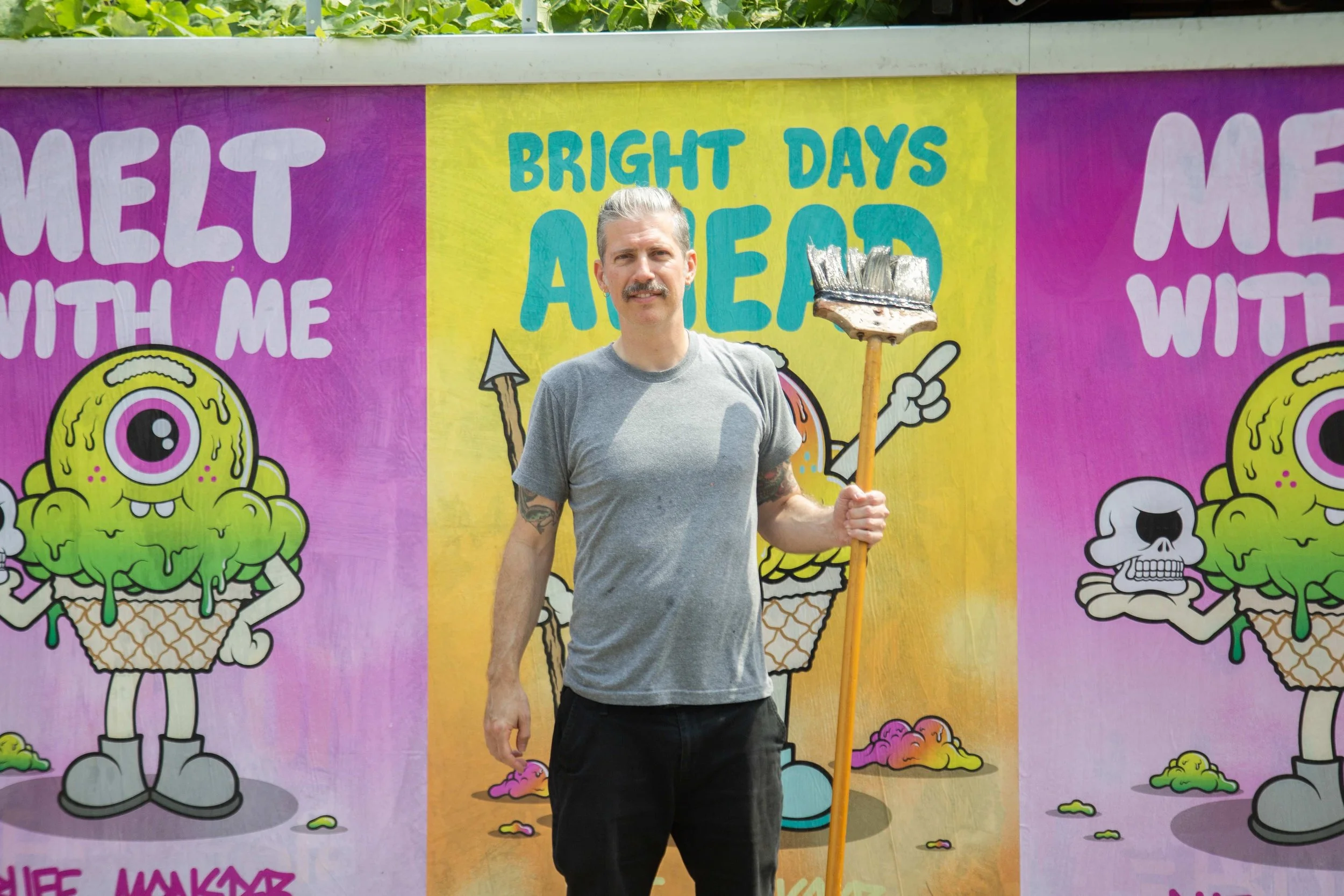
Tell us a bit about yourself; your background, your journey, and how you found your way into making art.
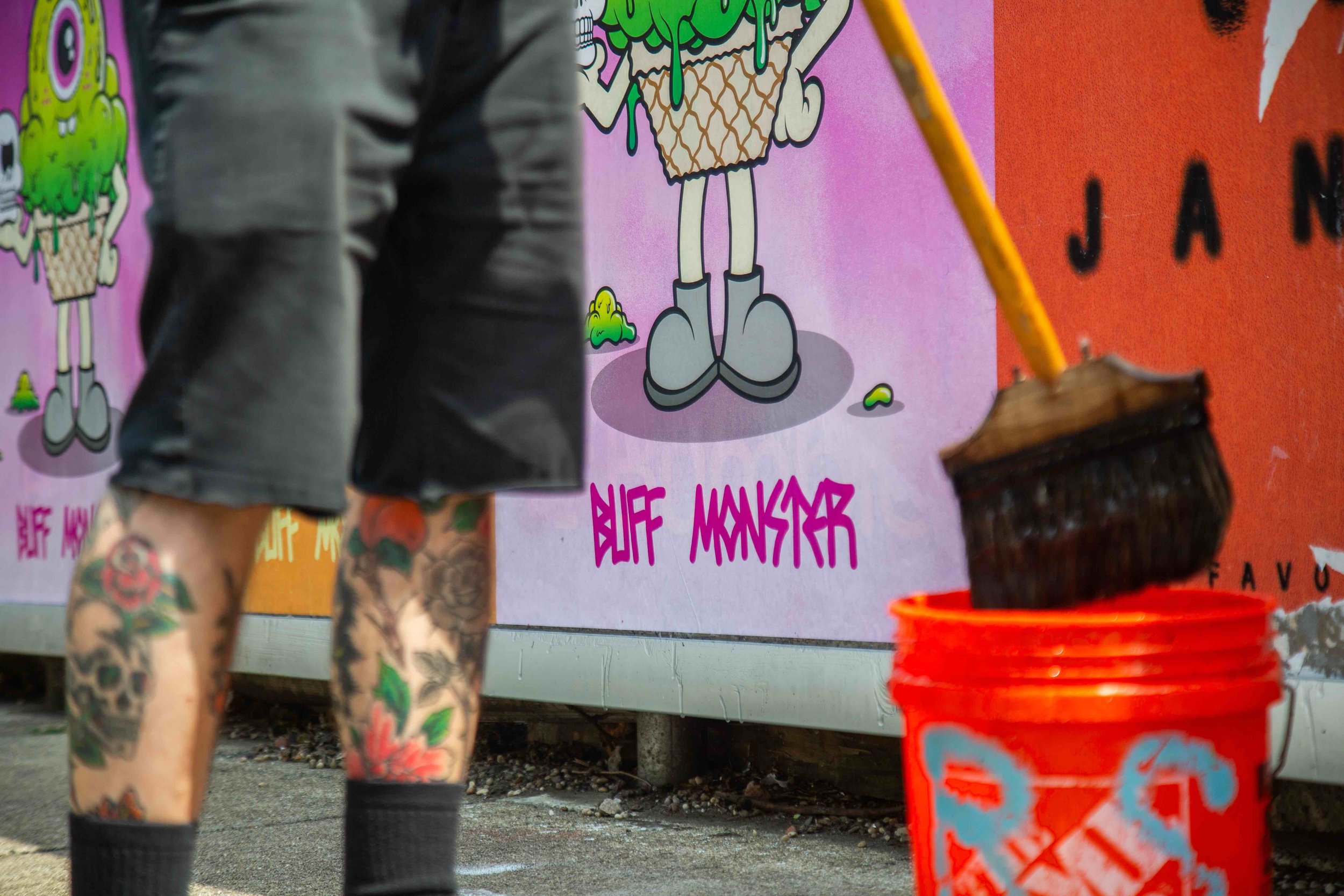
As a kid growing up in Hawaii, I always drew. But when I got introduced to graffiti over thirty years ago, it opened up a new world. All of a sudden, making art could be an adventure and an activity to do with friends. My graffiti career was very short-lived, but I went on to wheatpasting hundreds (thousands?) of hand-silkscreened posters across LA (and beyond) over many many years. All along I made paintings and collectibles, and worked with some of the biggest brands on a variety of projects.
Your work is immediately recognizable. Who or what do you consider key influences; either in art or outside of it? Is there a visual lineage or cultural thread that you see yourself in?
Yes, for better or for worse! Ha! I’ve always been inspired by heavy metal music, Japanese culture, graffiti and the whole history of (Western) art. I guess I’m part of the street art movement, the low brow art movement, maybe the contemporary art movement if I’m feeling extra ambitious, but ultimately, I’m simply an artist (who’s done a lot of different things over many years).
How did the collaboration with Seen Media come to life? What excited you about the idea of sharing your work through the Summer Art Series on the streets of NYC?
In the thirteen years that I’ve lived in NYC, I’ve always enjoyed painting murals, big and small, as my contribution to the ever-changing landscape of NYC. But wheatpaste posters are my roots; it’s how I made a name for myself over 20 years ago in LA. But when I moved to NYC, I stopped wheatpasting and started painting murals. So when Seen reached out about the opportunity to put up some posters around NYC, I was super excited! I wanted to approach them differently than I would have done in the old days. I spent a lot of time conceptualizing what this campaign could be and in the end, the 4 posters serve as a cohesive campaign (and leaves room for more in the future).
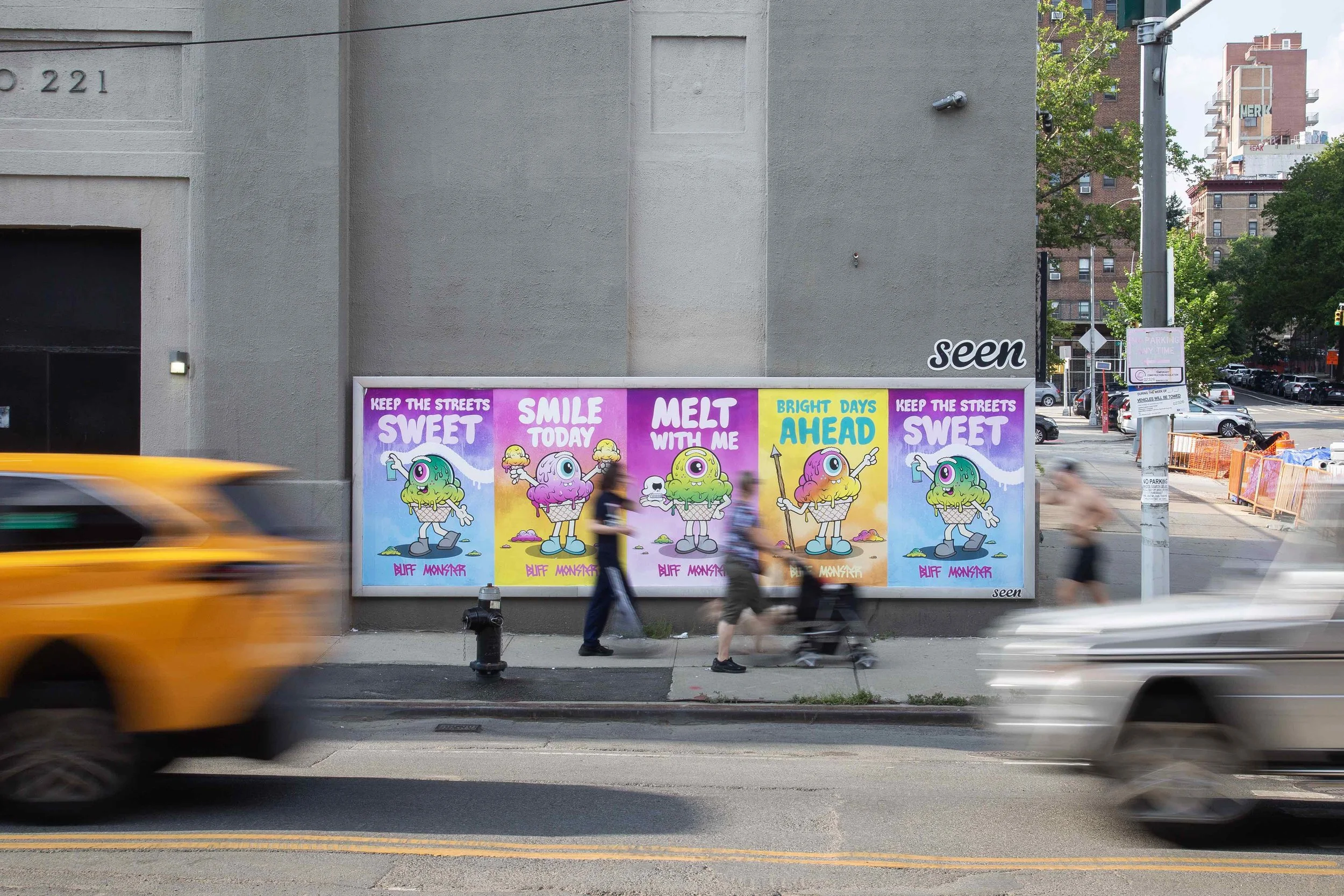
The “Melty Misfit” character feels like a central figure in your visual universe. Can you introduce us to them? What’s their story, and what do they represent to you?
As a stand-alone character, I’d call him Mister Melty; as a loose group of related characters, I’d call them The Melty Misfits. Either way, they’re embodiments of good vibes, and hopefully they communicate a range of emotions and complex siutations in a very relatable way, like any good cartoon character can. Ice cream is a metaphor for life, fleeting and uncertain, you have to enjoy it while it lasts.
Your palette is bold, loud, joyful. What draws you to these colors; and how do you use them to communicate?
I think my bright color palette comes from growing up in Hawaii; I don’t really know what else to attribute it to. But also, the work, and especially these posters, is about being optimistic and uplifting, so anything besides bright colors would be weird and incongruous.
Is there a message behind the work; or a feeling you hope to spark in people when they encounter it on the street?
Well, a very small minority of people who see the work will recognize it as mine, and in that case it should be consistent with my previous work. But the vast majority of people who pass by them, won’t have a background in art and certainly won’t be knowledgeable about the street art movement, so for them, the posters have to function in a very simple and direct way. And so without any context or background, I hope they read as nice uplifting messages of unknown origin.
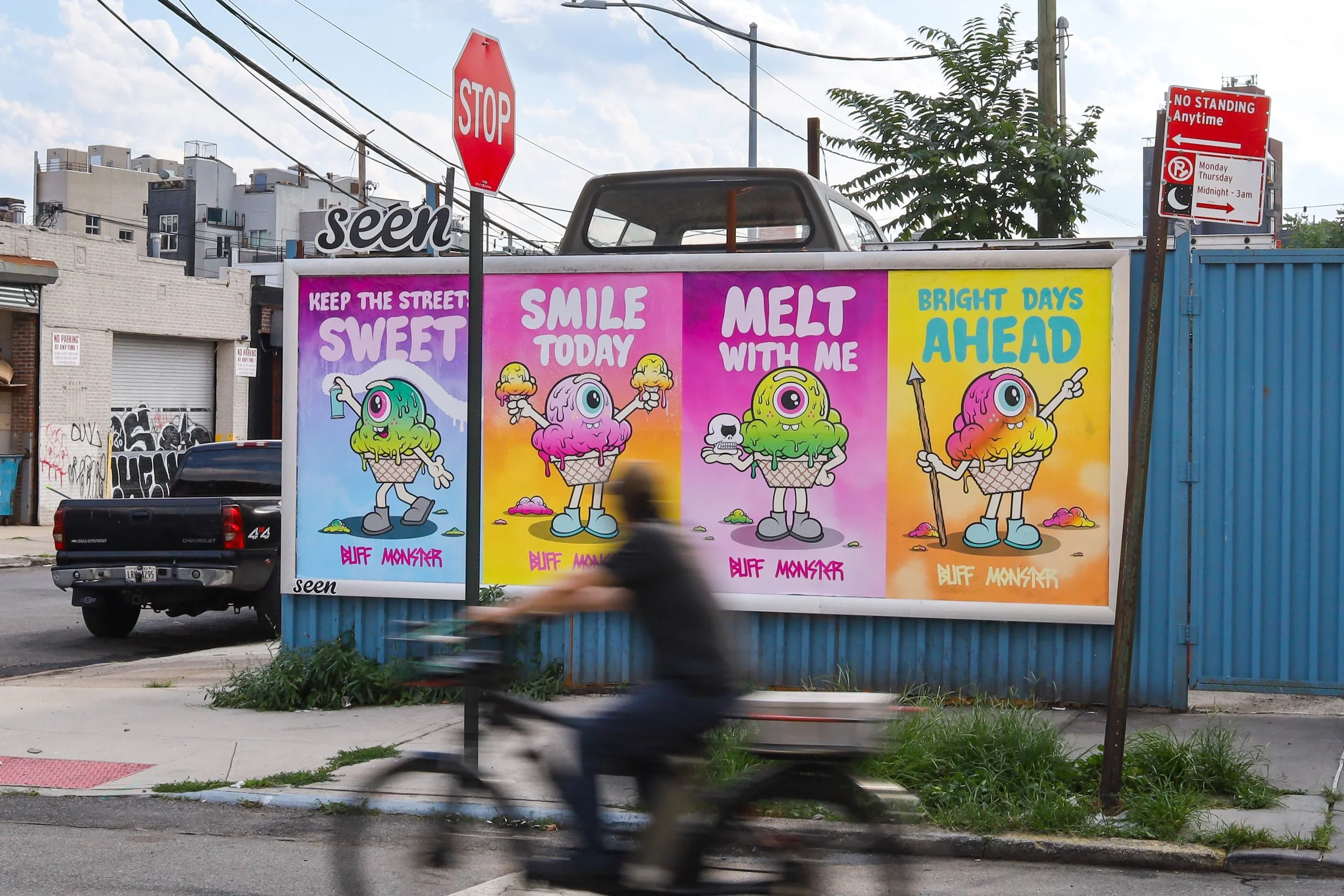
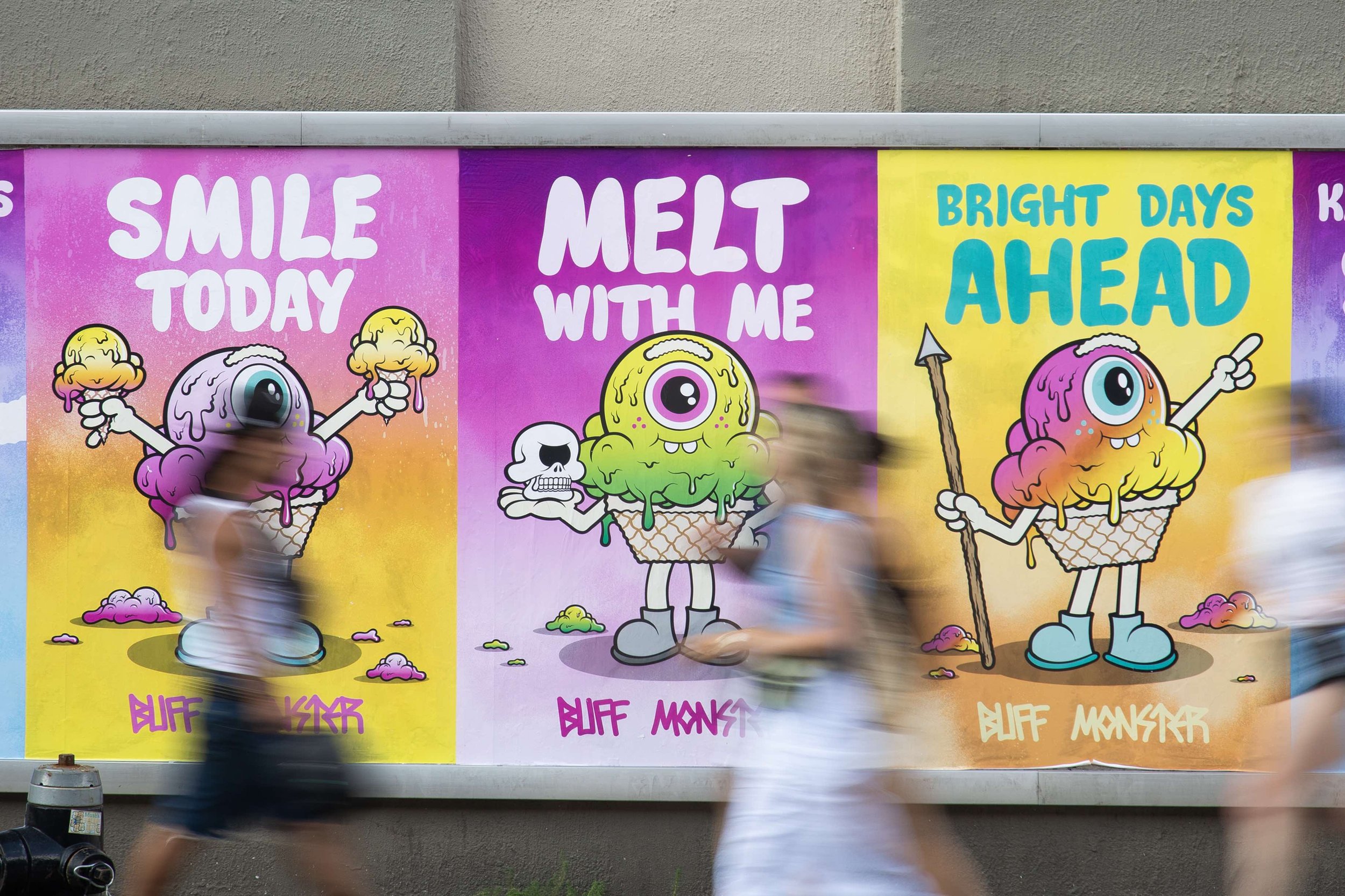
Art on the streets is often fleeting, but also incredibly impactful. What kind of reaction are you hoping for with this series?
Serendipity is often a prerequisite for an impactful street art encounter; you should stumble upon it as you’re rushing to work or to meet a friend and cause you to stop for a few seconds as it unexpectedly captures your attention. So the goal is just for people to happen upon them and enjoy them for a fleeting moment.
Looking ahead, what’s next?
Just finished a cool little mural in Little Italy and I’m always crankin’ on new things in the studio. Later in the year, I have a month-long artist residency, so that’ll be a new experience. But, of course, thanks again to Seen Media for the opportunity to get more art out on the streets of NYC!!